2019 · Exhibition + Demo
Robotic 3DP Experiments
An experimental project that developed a polycarbonate FFF 3D printing process using an industrial robot, and demonstrated at the ZER01NE DAY 2019 exhibition how variable layering and 6-axis control overcome overhangs without supports.
- Year
- 2019
- Project Type
- Exhibition + Demo
- Technology
- Robotic 3D Printing
- Industry
- Design
- Exhibition
- ZER01NE DAY 2019
Overview
In the ZER01NE CREATOR project, BAT experimented with developing and applying robotic 3D printing and robotic machining processes to produce architectural components in plastic and in a casting material, GRG (glass-reinforced gypsum), respectively.
With the goal of printing polycarbonate for use in architectural components, we experimented with developing an FFF (fused filament fabrication) 3D printing process using an industrial robot. The greater freedom of movement of an industrial robot allows it to respond more flexibly than conventional 3-axis machines to part size, inclination and layer height. This allowed us to explore the fabrication of new patterns and forms, as well as specialized printing strategies such as support-free printing and variable layering.
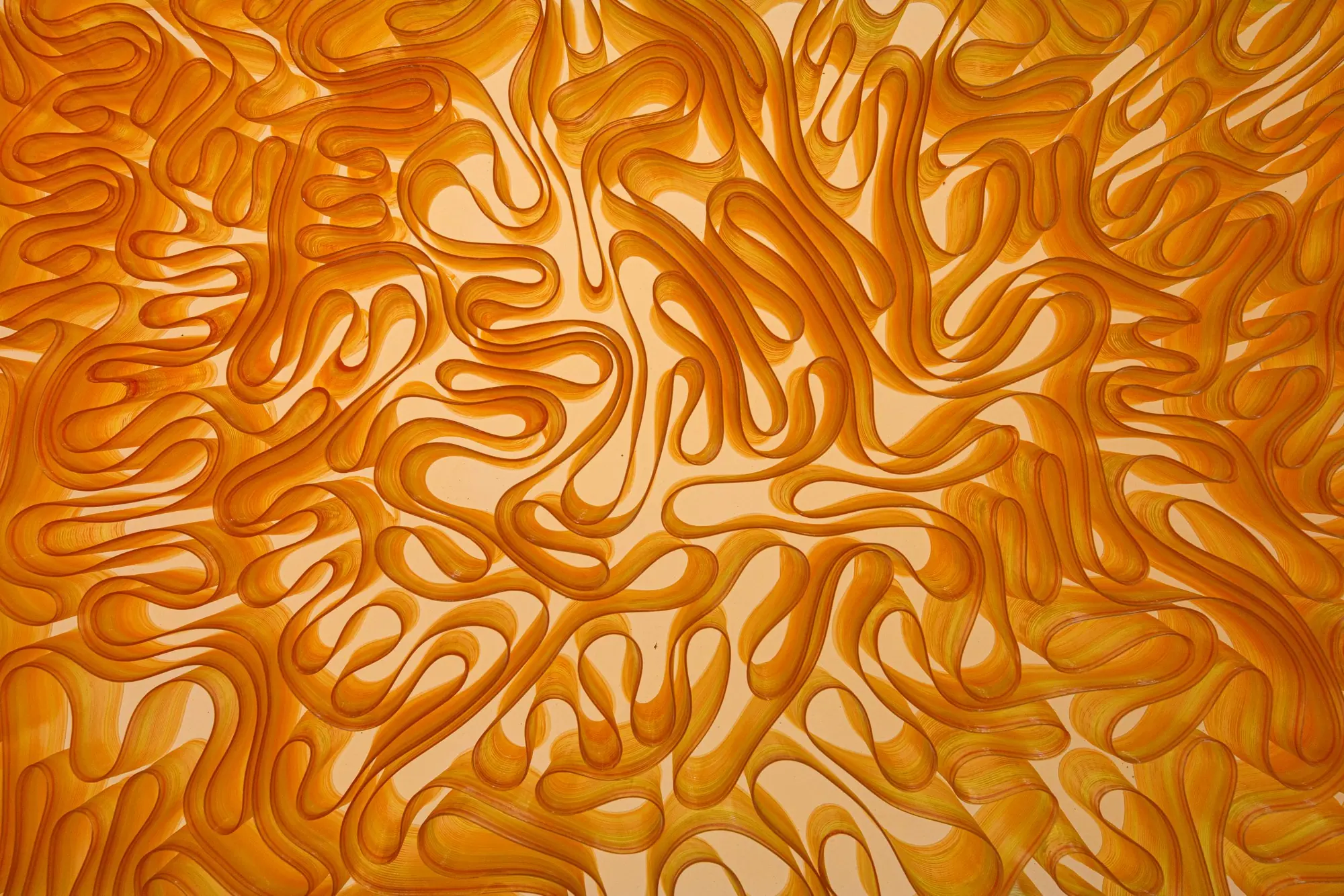
The Wrinkle Filling Panel, made before the exhibition, used variable layering — varying the layer height — so that the depth of the extruded pattern changes from area to area as the layers build up. In the live demonstration at the exhibition, 6-axis robot control and variable layering were applied to print a form with substantial overhangs, showing how overhangs can be overcome without supports.
Gallery
5 images · Click to enlarge